Report: Iran secretly helped N. Korea with nuclear program
North Korean scientists alone could not have achieved existing advances to country's nuclear program, British officials tell Telegraph
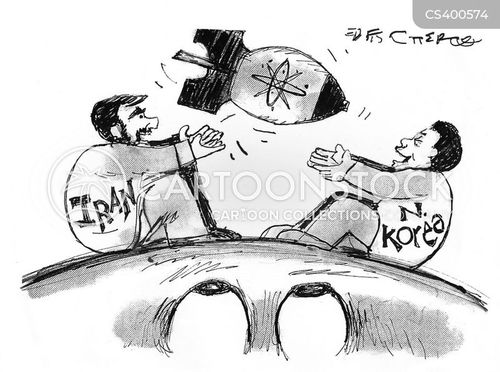
British officials fear that North Korea's sudden advancement in developing nuclear weapons may be due to secret support from Iran, The Sunday Telegraph reported over the weekend.
Senior British government officials told The Sunday Telegraph that North Korean scientists alone could not have achieved the recent technological advances to the country's nuclear program.
"North Korean scientists are people of some ability, but clearly they're not doing it entirely in a vacuum," one government official said.
According to the reports, the British Foreign Office is investigating whether "current and former nuclear states" helped North Korean leader Kim Jong Un in his drive to mount nuclear warheads on missiles.
"For them to have done this entirely on their own stretches the bounds of credulity," a Foreign Office source was quoted by The Sunday Telegraph as saying.
According to the report, Iran tops the list of countries suspected of providing some form of assistance, alongside Russia.
Meanwhile, German Chancellor Angela Merkel voiced willingness to launch a diplomatic initiative to end North Korean nuclear aspirations and the country's missile program, suggesting the Iran nuclear talks as a model.
South Korea on Saturday braced for another possible North Korean missile test as it marked its founding anniversary, just days after the sixth North Korean nuclear test -- the most powerful blast to date -- which drew the ire of the international community and exacerbated the standoff with the U.S.
"If our participation in talks is desired, I will immediately say yes," Merkel told the Frankfurter Allgemeine Sonntagszeitung in an interview.
She pointed to negotiations that led to a landmark nuclear agreement between Iran and world powers in 2015, in which Germany and the five countries on the United Nations Security Council with veto power took part in talks that led to Iran agreeing to curb its nuclear work in return for the lifting of most sanctions.
Merkel called it "a long but important time of diplomacy" that ultimately had a "good end" last year, referring to when the deal was implemented.
"I could imagine such a format being used to end the North Korea conflict. Europe and especially Germany should be prepared to play a very active part in that," Merkel added.
She said she thought the only way to deal with North Korea's nuclear program was to come to a diplomatic solution, adding: "A new arms race starting in the region would not be in anyone's interest."
Last Thursday, Merkel met with Israel's President Reuven Rivlin, who warned her that Iran "may drag the entire Middle East into war." The German chancellor also spoke to Chinese President Xi Jinping and Japanese Prime Minister Shinzo Abe about North Korea this week.
She will reportedly speak by telephone with Russian President Vladimir Putin on Monday.
U.N. experts, meanwhile, said North Korea has illegally exported coal, iron and other commodities worth at least $270 million to China and other countries including India, Malaysia and Sri Lanka in the six-month period ending in early August in violation of U.N. sanctions.
The experts monitoring sanctions said in a report released Saturday that Kim's government continues to flout sanctions on commodities as well as an arms embargo and restrictions on shipping and financial activities.
They said North Korea is also reportedly continuing prohibited nuclear activities with weapons-grade fissile material production at the Yongbyon nuclear complex, construction and maintenance at the Punggye-ri nuclear test site, and at a uranium mine in Pyongsan.
The eight-member panel of experts said it was also investigating the widespread presence of North Koreans in Africa and the Middle East, particularly in Syria, "including their involvement in prohibited activities."
The experts said one inquiry is into "reported prohibited chemical, ballistic missile and conventional arms cooperation" between Syria and the Democratic People's Republic of Korea, the country's official name.
They said this includes activities on Syrian Scud missile programs and "maintenance and repair of Syrian surface-to-air missiles (SAM) air defense systems."
The panel noted that two unnamed countries reported intercepting shipments destined for Syria. It did not identify the contents and said Syria has yet to respond to its inquiries.
-------------------------------
Note to Marikod - What was that you recently said about "speculation"?